(Note: Link to a social enterprise where I sometimes contribute to below.)
You may think that the only social good companies should do is to earn a profit. However this is missing the point.
These days, firms not just have to make a profit, they have to fulfill at least an indirect social change. They have to be socially responsible corporate citizens.
Some companies choose to be organised as a social enterprise. A social enterprise aims to improve not just financial, but also social and environmental well-being. Although firms still have to make money, at least firms have to be perceived to exist to do social good.
It is the muddy and hazy perception of social good that make it so hard to define a social enterprise. Often they may pass off as a charity that aims to make money. However, my experiences with social enterprise, more than typical enterprises, is that they are very pushy. Yet, public funds are often disbursed to social enterprises because they are able to do some things that the private market alone may not fully achieve. They direct enterprising people to do some things that are seen as 'beneficial'.
I consider myself very familiar in the social service sector currently. Almost everywhere I turn, there is always someone from a social enterprise who keeps asking for more funding, even with profitable businesses.
It seems to me that social enterprise is not just about the triple bottom line of profits, people and planet. It is about the triple aims of profitability, credibility (competition among social enterprises grants and awards is keen among social enterprises) and capacity to make the most out of the inputs of social enterprises.
I am skeptical of many social enterprises. They are like wannabes. They talk about achieving dreams or betterment, but work like (sometimes even worse than) conventional firms. Plus, some social enterprises are funded by government monies. We taxpayers might as well just pay for the social programmes provided by communities, rather than by private enterprises.
Time and again I hear: if I do not hire you, no one else will - in countless social enterprises out there. It is very demeaning and insulting to the people in the social enterprises. They are treated not as full human beings, but beneficiaries, to be pitied at. Where is the truth and love in these social enterprises?
The worse is that social enterprises are critiqued on 'sustainability'. That being, how their operations can sustain. If they fail, tongues wag around 'this firm should have a sustainable financial model, they can't keep relying on grants'. If they succeed, they are rewarded the spoils, they are celebrated and they get the positive media attention and spin without asking.
I strongly believe that to do social good, even with all the nastiness in social enterprises, there should at least be decency and authenticity. A social enterprise must be honest with its stakeholders, employees and clients: we are not a non-profit organisation and we work for profits. A social enterprise has to be real. Be honest, the social enterprise is just one out of the many firms crowding the do-gooder space, what differentiates the different social enterprises, even if they are almost all cut of the same cloth of desire and want, should be the connection to one's life stories.
For all the negative things I harbour about most social enterprises, as I am impressed by the honesty and authenticity of the boss of AbleThrive. As an autistic individual, I may not fully understand spinal cord injury and the effect of the people. However, I believe if I were to be that someone who is on the seed fund-seeking circuit and go getting, AbleThrive's Brittany Dejean would be my role model. I love the focus in AbleThrive to showcase abilities, celebrate rehabilitation every step in the way towards recovery, and the thematic approaches to the different aspects that improve the quality of life for people with the injury.
Monday, February 26, 2018

Thursday, June 16, 2016
Singapore Stocks Stink
Hardly anyone trades Singapore stocks these days. There simply are not enough stocks in volume that can be traded.
Indeed, what is done in the Singapore Stock Exchange is perplexing - why would they introduce a minimum trading price and watch-list for stocks that do not meet volume and minimum price requirement, when the issue is low trading volume. Indeed, steps should be done to increase the volume of stocks traded, which include abolition of standard lots.
There is a deeper problem in Singapore stocks, though. Around half Straits Times Index component stocks are mainly government-linked, and a few are land and property developers and commodity trading firms. I feel that the Singapore stock exchange is not reflective of our economy, because the technology and biomedical sectors, important engines to our economy that reflects our dynamic economy better, are not represented enough in the Straits Times Index. Indeed, our economy might as well be controlled in either Hong Kong/Shanghai or New York/London/Frankfurt.
I do not suggest investing in Singapore stocks. Singapore-based stock investors could still keep a tab in long-term investment paths, those firms with long-term strategies that are actually well executed (e.g. DBS, CapitaLand, ST Engineering). Even with good management, I shall always wait for a better time to long the company. When the market is heading sideways, it is better for me to avoid Singapore markets completely.
Singapore markets do indeed stink!
Indeed, what is done in the Singapore Stock Exchange is perplexing - why would they introduce a minimum trading price and watch-list for stocks that do not meet volume and minimum price requirement, when the issue is low trading volume. Indeed, steps should be done to increase the volume of stocks traded, which include abolition of standard lots.
 |
| It's as if we have a nuclear fallout in Singapore Exchange... |
There is a deeper problem in Singapore stocks, though. Around half Straits Times Index component stocks are mainly government-linked, and a few are land and property developers and commodity trading firms. I feel that the Singapore stock exchange is not reflective of our economy, because the technology and biomedical sectors, important engines to our economy that reflects our dynamic economy better, are not represented enough in the Straits Times Index. Indeed, our economy might as well be controlled in either Hong Kong/Shanghai or New York/London/Frankfurt.
I do not suggest investing in Singapore stocks. Singapore-based stock investors could still keep a tab in long-term investment paths, those firms with long-term strategies that are actually well executed (e.g. DBS, CapitaLand, ST Engineering). Even with good management, I shall always wait for a better time to long the company. When the market is heading sideways, it is better for me to avoid Singapore markets completely.
Singapore markets do indeed stink!
Stock Investments
Investing in stocks is for you - who seek to tell the story for a long time.
Stocks are not where you get the highest returns for your investments in the short run. We will never know what happens in the future. However, you do actually own a share of the economic engine of the economy, and fund its growth path and plans.
I am unlike the typical stock investor. I look at what do I expect in the future. What will I keep using and enjoy using now and in the long run, I think it is perfectly reasonable for me to pump my funds in these companies. For instance, I do expect to use a lot of Internet and telecommunications services, I expect to use online banking, I may drive around in fuel-efficient and perhaps self-driving cars. I will probably live in downtown in a city where the weather is good and the job opportunities aplenty (and so do both elderly folks and younger working professionals), I do grocery shopping in both places where I need to touch and see things and online.
Also, I try to match what I expect to spend in the near future to the portfolio I am having, so telecommunications never go above 20% of my portfolio, cars never above 20%, housing never above 30% and so on.
I wish you good luck in your investing journey!
Stocks are not where you get the highest returns for your investments in the short run. We will never know what happens in the future. However, you do actually own a share of the economic engine of the economy, and fund its growth path and plans.
 |
| Stock Market |
I am unlike the typical stock investor. I look at what do I expect in the future. What will I keep using and enjoy using now and in the long run, I think it is perfectly reasonable for me to pump my funds in these companies. For instance, I do expect to use a lot of Internet and telecommunications services, I expect to use online banking, I may drive around in fuel-efficient and perhaps self-driving cars. I will probably live in downtown in a city where the weather is good and the job opportunities aplenty (and so do both elderly folks and younger working professionals), I do grocery shopping in both places where I need to touch and see things and online.
Also, I try to match what I expect to spend in the near future to the portfolio I am having, so telecommunications never go above 20% of my portfolio, cars never above 20%, housing never above 30% and so on.
I wish you good luck in your investing journey!
Wednesday, March 2, 2016
Germany: not the future of our economy
We always praise Germany for the good Germany does: free higher education, free and effective healthcare and robust economy. Germany benefits from low oil prices through low oil prices and increased contributions from renewable energy. It does not hurt one bit that Germany's national football team are world champions. Almost everyone I know sings the praises for Germany. However, I do not think like ordinary people.
Germany is not what the future of the economy is like. Her education system is not working to maximise their populace's diversity, her most innovative people do not get the opportunity to live out their opportunities, and her banks are not globally competitive to make the most of our global opportunities.
 |
| Commerzbank Tower, Frankfurt. What a bank should not be like.By Mylius - Own work, GFDL 1.2, https://commons.wikimedia.org/w/index.php?curid=11184505 |
There is considerable schisms between classes in Germany.
Just look at the education system. Indeed, the education system is free at all levels. However this does not give the best outcomes to all students who work hard and do their best in schools. Schools can decide, at age 10, to sort students into different tracks: the university preparatory (gymnasium) track, the realschule track and the vocational hauptschule track. There is no social mobility to speak of. There is no chance a bright shy person whose parents or grandparents move from another country, say, Turkey or Serbia, to move up the social ladder, if his school principal decides no matter how hard a student works or how good he is, he still belongs to the hauptschule schools anyway.
I am not against vocational schools. I am against their ineffectiveness on German society.
The hauptschules are regarded as dumping grounds of certain groups of students: students from minority backgrounds, students with special learning needs, students with absent parents who are unemployed, and so on. There is only a remote possibility of a student from hauptschules to get to universities, if any. They just do not work to fill job positions. The employers often do not see the work ethic or the technical know-how to enable graduates of hauptschules to begin their apprenticeships with these companies. A permanent underclass, dependent on welfare, results, and they are not able to contribute to the economy. What a waste to the potentials of German society!
In contrast, Finland has a better model for vocational schools. Students are only divided by ability at age 16, by when many students had already reached puberty and are mature to have a handle on their lives. Also, students in both the academic and vocational paths in Sweden do get the same opportunity to study in university.
The German societal model is also not looking forward to the future. She is too rigid to withstand the ever changing world.
Germany does not has an inspiring environment for fashion, unlike France, UK or USA, for fashion or the creative arts. Germans restricts religion to the point organised religion, a huge unifier of community issues in many countries, is in decline: both the Protestant (Lutheran) and Catholic churches see declines in church attendance. Even rich German people are not able to live up life, as they get criticised in their home countries to live opulent lifestyles. No wonder it has fewer startups than other countries, and even to recent past.
A better societal model may be South Korea. Like Germany, South Korea prides herself as a country with rich cultural and racial heritage, which is essential because I do not think there is another country where ethnic Koreans can call 'home'. Unlike Germany, however, South Korea is more open to new ideas, new inspirations in life and even religions. Also, South Korea has plenty of Ivy League admissions, pop culture and startups, above the size of the country (which is smaller than Germany), that the country could be proud of.
Then there is the case for banks. They are losing to foreign competitors and are not able to catch up. German banks may be a sign of things to come for firms in other sectors, such as heavy industries and environmental management, as we all face a world with unrestricted trade globally.
There used to be three large banks in Germany: Deutsche Bank, Commerzbank and Dresdner Bank. In 2008, however, the parent company of Dresdner Bank decided to sell the bank to Commerzbank, which then ceased to be an independent legal entity. Then, in 2012, even Commerzbank is deemed as a bank with declining systemic importance.
Such is the decline of banks in Germany. Banks in Germany are supposed to be shareholders and decision makers of companies, which works to bring better alignment of banks and the companies they loan to. However, with new capitalisation requirements in banks worldwide, they are not able to compete with the larger banks overseas, especially British, American, French and Japanese banks. If they are weak today and do not have the strong resolve to reform for the future, how can German banks be relevant in the future to the companies they loan to, no matter how fantastic those companies are?
Germany certainly has good organisation, good and effective governmental and social institutions and are working towards a more sustainable future. They all need fine tuning for the future, with financial reforms, more openness to new ideas around the world, and a more inclusive and attentive education system to the diverse needs of the Germans.
There used to be three large banks in Germany: Deutsche Bank, Commerzbank and Dresdner Bank. In 2008, however, the parent company of Dresdner Bank decided to sell the bank to Commerzbank, which then ceased to be an independent legal entity. Then, in 2012, even Commerzbank is deemed as a bank with declining systemic importance.
Such is the decline of banks in Germany. Banks in Germany are supposed to be shareholders and decision makers of companies, which works to bring better alignment of banks and the companies they loan to. However, with new capitalisation requirements in banks worldwide, they are not able to compete with the larger banks overseas, especially British, American, French and Japanese banks. If they are weak today and do not have the strong resolve to reform for the future, how can German banks be relevant in the future to the companies they loan to, no matter how fantastic those companies are?
Germany certainly has good organisation, good and effective governmental and social institutions and are working towards a more sustainable future. They all need fine tuning for the future, with financial reforms, more openness to new ideas around the world, and a more inclusive and attentive education system to the diverse needs of the Germans.
The Small Long
 |
| Charging bull By Aseba - http://www.flickr.com/photos/aseba/6179708990/, CC BY-SA 2.0, https://en.wikipedia.org/w/index.php?curid=28333508 |
The banking sector in Singapore now has a P/E ratio below 10, around the bottom P/E level of bear markets. Among all the banks, DBS has the lowest P/E at 8.56 currently.
However, future earnings in banks seem uncertain. Oil and gas prices collapsed and will probably stay low for a long time. Our banks have substantial exposure to China - 17% for DBS especially, and there is an expected slowdown in the Chinese economy. Also, there is no substantial new economic activity in Singapore, as Singapore is still struggling in healthcare, education and technology sectors. Where can banks find higher quality, more financially sustainable sources of loan?
Even with the recent gains in Straits Times Index (STI), I doubt the gains will go on for a long time. If you ever invest in stock markets now, you may consider long the market, but not for long.
Only when DBS reaches around 8 dollars then I may consider buy back DBS, such is the lack of market confidence in the Singapore stock market that we should be wary of false hope.
Thursday, November 12, 2015
Why invest in stocks? A primer on stock investing
Why invest in stocks?
You buy in stocks - because you get to own companies.
Ownership. This is more exciting than earning a profit on trades or flips. You actually have a stake in something that is so important, that hires some people and pays taxes to the Government for its programs.
The stock market platform is a platform where you can buy and sell ownership of companies fairly and equally. They can attract investors to trade fairly. They help companies to raise funds from us in a highly liquid market, where shares can be easily traded.
When a stock is listed, it must meet certain criteria. A company's stock on the catalist needs to be sponsored by a financial institution. To list on the mainboard, a company needs to meet certain criteria of scale, such as pre-tax profits of S$30 million in more than three financial years recently, and capitalisation of more than S$150 million.
There are different stocks to buy. They include: stocks, real estate investment trusts (REITs, where property and financial institutions' managers bundle properties into tradable portions), exchange traded funds (ETFs), warrants, extended settlements, bonds and preference shares.
For REITs listed in Singapore, there are 34 of them in 6 different categories: residential, office, retail, hotel, industrial and hospitality. Although interest rate environments are difficult for REITs, I think given the recent property cooling measures, it is actually more attractive to invest in residential REITs that cater to the higher end markets than in mass-market or suburban developments.
ETFs, on the other hand, buys and sells shares to reflect performance without the use of a fund manager, in accordance to an indicator. Examples include Lyxor, SPDR, STI ETF by Nikko AM, and so on.
Bonds are fixed IOUs where we buy a company's borrowings. Unfortunately, liquidity in Singaporean bond markets is not liquid enough, as we are a small market.
Preference shares are shares that give us a higher priority than ordinary shareholders, when companies dissolve and distribute residual profits. In exchange for a fixed dividend, preference shareholders do not hold voting shares. Also, there might not be maturity dates on preference shares, unless they are callable hares.
There are two schools of thought in share investing: technical analysis (TA) and fundamental analysis (FA).
TA is the art of predicting the future price movements of a company, based on both price and volume. TA gives us a point of reference on when we can enter and exit a market. Most stock beginners tend to be carried away by the hoopla of TA, because they will remember the patterns and candlesticks of intraday and inter-day charts, and make a living out of timing the markets. But the market is not made up of just winners. People are as likely to lose money as they do gain profits in the stock market. Indeed, only 5% of traders consistently succeed. I am trying my best to be one of the top 5%.
One should buy companies at the right pricing and exit at the right juncture. Hence, TA is useful as a guide to stock entry. However, it shouldn't be used alone.
Enter FA.
For new investors, I would strongly recommend they learn FA, if they want to get serious about share investing. If you need some guidance on share picking, do +1 or contact me on Google+ or Blogger. It will take some time as I have a day job (explaining the long gap between posts on this blog), but FA will definitely be worth it. The good thing is, to trade stocks, you just need to be old enough to legally trade them, and you have the desire to know more about the companies you are investing in.
Stock market investing should be a pleasant, sweet experience. We should preferably invest in the companies that we understand well. We should be familiar with the business models of the firms, understand that they are in great financial health, being satisfied with their returns and capital gains and satisfied at their growth or corporate development.
The main tool FA aficionados use is the Price-Earnings, or P/E ratio. Earnings grow, but the prices may not reflect the growth of earnings proportionately.
For stocks with a P/E ratio of below 10, they are deemed as 'cheaper'. For stocks with a P/E ratio of above 20, they are deemed as expensive. Most firms have P/E ratio of between 10 and 20. This means, when a firm has a P/E ratio of 5 to 9 and it is doing well, we should snap it at the right timing from TA trends. When a firm has unsustainable P/E ratio of more than 25 times, unless it is a growth stock with exciting developments the firm can afford to pay, I would not touch the stock.
When you invest in shares, you have to take note of cumulative dividends and cumulative rights, or cum dividend/CD or cum rights/CR in short. Stocks with CD do not yet distribute dividends, while stocks with XD (eX-dividend) has already distributed dividends. For CR, they are meant to help the company to raise money for existing shareholders. The company is issuing more shares, and it may offer current shareholders to buy new shares at discounted prices.
Earlier, I mentioned that buying shares mean buying shares of management in the company. You do not hold physical certificates in owning shares these days. They are kept with the Central Depository. Unless you go to their office to ask for share certificates, you don't get share certificates to show you're an owner of some shares of the company.
When you look at stocks, you have to consider the operations of a firm.
Basic ratios have to be profitability ratios (gross and net profit margins), liquidity ratios (think current ratio) and solvency ratios (along with interest coverage ratio). It has to be one with solid potential growth in the next 5-10 years. With globalisation, I expect the typical telecommunications, logistics, transport and hospitality-linked firms to keep growing. Also, with climate change, oil prices may not sink forever, and this may result in the rise of commodities, alternative energy (think oil palm, for example) and water.
You can trade your stocks either through a remisier/trading representative, or through the online platform of your stock broker. The trading representative is still relevant to you because he may manage your transactions and credit risk, as you are supposed to make payments within 3 days of the share transaction.
Brokerage houses charge commission rates. Hence, if you want to minimise your brokerage fees, you try to trade within $8,500 for most companies, as most brokerage houses charge 0.28% fees with a $25 minimum commission rate. If you are going to pay $25 per trade anyway, why not trade at around S$8,000 if you can afford it?
You buy 50% of your stocks at the first opportunity. When you're right, buy 30% more stocks at the second entry point, and 20% at the third one. If you're wrong, sell fast.
You buy in stocks - because you get to own companies.
Ownership. This is more exciting than earning a profit on trades or flips. You actually have a stake in something that is so important, that hires some people and pays taxes to the Government for its programs.
The stock market platform is a platform where you can buy and sell ownership of companies fairly and equally. They can attract investors to trade fairly. They help companies to raise funds from us in a highly liquid market, where shares can be easily traded.
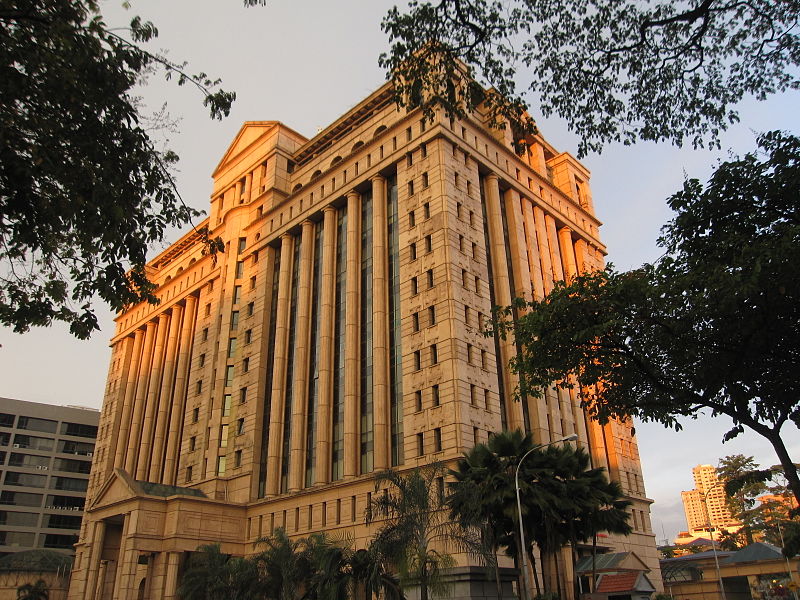 |
| Kuala Lumpur Stock Exchange |
When a stock is listed, it must meet certain criteria. A company's stock on the catalist needs to be sponsored by a financial institution. To list on the mainboard, a company needs to meet certain criteria of scale, such as pre-tax profits of S$30 million in more than three financial years recently, and capitalisation of more than S$150 million.
There are different stocks to buy. They include: stocks, real estate investment trusts (REITs, where property and financial institutions' managers bundle properties into tradable portions), exchange traded funds (ETFs), warrants, extended settlements, bonds and preference shares.
For REITs listed in Singapore, there are 34 of them in 6 different categories: residential, office, retail, hotel, industrial and hospitality. Although interest rate environments are difficult for REITs, I think given the recent property cooling measures, it is actually more attractive to invest in residential REITs that cater to the higher end markets than in mass-market or suburban developments.
ETFs, on the other hand, buys and sells shares to reflect performance without the use of a fund manager, in accordance to an indicator. Examples include Lyxor, SPDR, STI ETF by Nikko AM, and so on.
Bonds are fixed IOUs where we buy a company's borrowings. Unfortunately, liquidity in Singaporean bond markets is not liquid enough, as we are a small market.
Preference shares are shares that give us a higher priority than ordinary shareholders, when companies dissolve and distribute residual profits. In exchange for a fixed dividend, preference shareholders do not hold voting shares. Also, there might not be maturity dates on preference shares, unless they are callable hares.
There are two schools of thought in share investing: technical analysis (TA) and fundamental analysis (FA).
TA is the art of predicting the future price movements of a company, based on both price and volume. TA gives us a point of reference on when we can enter and exit a market. Most stock beginners tend to be carried away by the hoopla of TA, because they will remember the patterns and candlesticks of intraday and inter-day charts, and make a living out of timing the markets. But the market is not made up of just winners. People are as likely to lose money as they do gain profits in the stock market. Indeed, only 5% of traders consistently succeed. I am trying my best to be one of the top 5%.
One should buy companies at the right pricing and exit at the right juncture. Hence, TA is useful as a guide to stock entry. However, it shouldn't be used alone.
Enter FA.
For new investors, I would strongly recommend they learn FA, if they want to get serious about share investing. If you need some guidance on share picking, do +1 or contact me on Google+ or Blogger. It will take some time as I have a day job (explaining the long gap between posts on this blog), but FA will definitely be worth it. The good thing is, to trade stocks, you just need to be old enough to legally trade them, and you have the desire to know more about the companies you are investing in.
Stock market investing should be a pleasant, sweet experience. We should preferably invest in the companies that we understand well. We should be familiar with the business models of the firms, understand that they are in great financial health, being satisfied with their returns and capital gains and satisfied at their growth or corporate development.
The main tool FA aficionados use is the Price-Earnings, or P/E ratio. Earnings grow, but the prices may not reflect the growth of earnings proportionately.
For stocks with a P/E ratio of below 10, they are deemed as 'cheaper'. For stocks with a P/E ratio of above 20, they are deemed as expensive. Most firms have P/E ratio of between 10 and 20. This means, when a firm has a P/E ratio of 5 to 9 and it is doing well, we should snap it at the right timing from TA trends. When a firm has unsustainable P/E ratio of more than 25 times, unless it is a growth stock with exciting developments the firm can afford to pay, I would not touch the stock.
When you invest in shares, you have to take note of cumulative dividends and cumulative rights, or cum dividend/CD or cum rights/CR in short. Stocks with CD do not yet distribute dividends, while stocks with XD (eX-dividend) has already distributed dividends. For CR, they are meant to help the company to raise money for existing shareholders. The company is issuing more shares, and it may offer current shareholders to buy new shares at discounted prices.
Earlier, I mentioned that buying shares mean buying shares of management in the company. You do not hold physical certificates in owning shares these days. They are kept with the Central Depository. Unless you go to their office to ask for share certificates, you don't get share certificates to show you're an owner of some shares of the company.
When you look at stocks, you have to consider the operations of a firm.
Basic ratios have to be profitability ratios (gross and net profit margins), liquidity ratios (think current ratio) and solvency ratios (along with interest coverage ratio). It has to be one with solid potential growth in the next 5-10 years. With globalisation, I expect the typical telecommunications, logistics, transport and hospitality-linked firms to keep growing. Also, with climate change, oil prices may not sink forever, and this may result in the rise of commodities, alternative energy (think oil palm, for example) and water.
You can trade your stocks either through a remisier/trading representative, or through the online platform of your stock broker. The trading representative is still relevant to you because he may manage your transactions and credit risk, as you are supposed to make payments within 3 days of the share transaction.
Brokerage houses charge commission rates. Hence, if you want to minimise your brokerage fees, you try to trade within $8,500 for most companies, as most brokerage houses charge 0.28% fees with a $25 minimum commission rate. If you are going to pay $25 per trade anyway, why not trade at around S$8,000 if you can afford it?
You buy 50% of your stocks at the first opportunity. When you're right, buy 30% more stocks at the second entry point, and 20% at the third one. If you're wrong, sell fast.
Pots of Money
Going to any FRANK store, you see that there are four financial principles in life:
1. Saving
2. Investing
3. Insuring
4. Spending
Usually, we save before we spend, we save at least 10% of our income, and we maximise higher returns by looking at banks with higher interest rates. We also try to spend only the necessary, so we can eventually have more money for other uses.
Other uses may include insurance and investments.
Insurance protect our wealth. There are two types of insurance, namely: life and personal insurance.
For life insurance, we need coverage of 7 to 10 times of our monthly income, we need monies to cover our future hospitalisation and medical expenses that is an integrated healthcare plan and rider, we need a whole life or permanent disability insurance policy to cover our financial obligations when we are diagnosed with permanent disability. We may also need dependants' insurance, to cover our loved ones when we are not around.
Personal insurance covers travel insurance, home (housing loan and housing content) insurance and vehicle insurance.
As for investments, we multiply our wealth by two tools: fundamental analysis and technical analysis. Fundamental analysis looks at the intrinsic value of companies, while technical analysis looks at the direction of market prices and their effects on companies' stock performance.
May I humbly add something never mentioned in 'pots of money' -
5. Contributing.
What is the use of having so much wealth and protection when we are not relevant at all with our society? Our society has so much that we can improve on, especially with the widening rich-poor income gap, we need to do more to help the poor and helpless.
1. Saving
2. Investing
3. Insuring
4. Spending
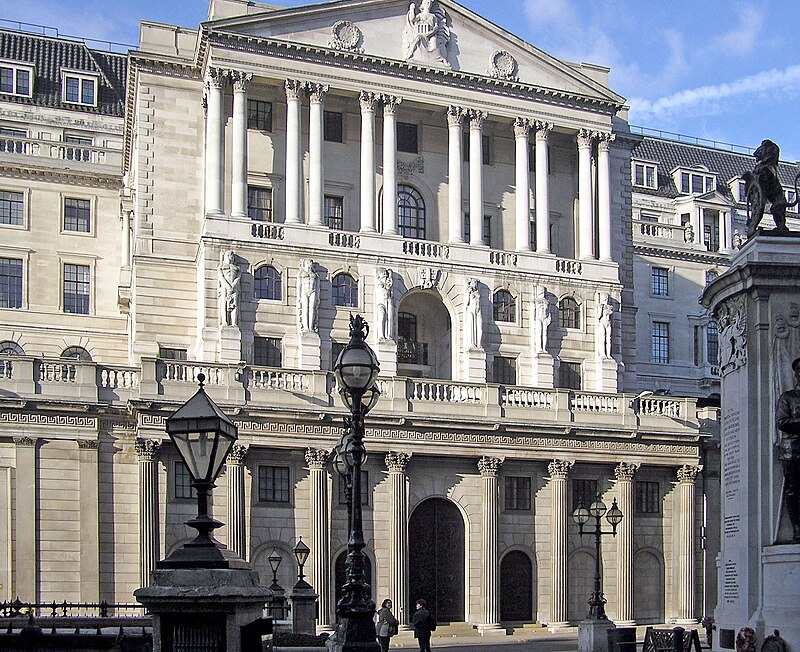 |
| Bank of England |
Other uses may include insurance and investments.
Insurance protect our wealth. There are two types of insurance, namely: life and personal insurance.
For life insurance, we need coverage of 7 to 10 times of our monthly income, we need monies to cover our future hospitalisation and medical expenses that is an integrated healthcare plan and rider, we need a whole life or permanent disability insurance policy to cover our financial obligations when we are diagnosed with permanent disability. We may also need dependants' insurance, to cover our loved ones when we are not around.
Personal insurance covers travel insurance, home (housing loan and housing content) insurance and vehicle insurance.
As for investments, we multiply our wealth by two tools: fundamental analysis and technical analysis. Fundamental analysis looks at the intrinsic value of companies, while technical analysis looks at the direction of market prices and their effects on companies' stock performance.
May I humbly add something never mentioned in 'pots of money' -
5. Contributing.
What is the use of having so much wealth and protection when we are not relevant at all with our society? Our society has so much that we can improve on, especially with the widening rich-poor income gap, we need to do more to help the poor and helpless.
Wednesday, November 11, 2015
Government schemes for higher productivity in smaller businesses
As an entrepreneur, one must better think of making the best out of our opportunities. Our world, an interconnected world with lots of opportunities, needs to commit the necessary fixed costs while scaling up and exponentiating, so our businesses can be 'cheaper, faster and better' for growth.
To grow our firms in Singapore, where space is a premium and physical resources are limited, we have to consider the capital, labour and entrepreneurship parts of production.
I believe that the Government is doing its best to support smaller businesses. After all, small and medium enterprises make up 99% of our businesses, and they employ 70% of our workforce and half of our economic output. The government defines SMEs eligible for grants and incentives as firms with some local management (at least 30% of total shareholdings) with annual sales turnover of S$100 million OR headcount of 200 workers, or less. Even companies with a hundred or so employees can build a large company, and seek to be leaner and more efficient, with government grants, if needed.
There are a few schemes smaller businesses can benefit from, namely: Productivity and Innovation Credit Scheme (PIC) by Inland Revenue Authority Singapore (IRAS), Innovation and Capability Voucher (ICV), Micro Loan Programme (MLP), SME Talent Programme (STP), Capability Development Grant (CDG) by Spring Singapore, iSprint by Infocomm Development Authority of Singapore (IDA) and WorkPro by Ministry of Manpower.
PIC is currently used for tax deductions for activities that boost productivity. It can be used for:
- Acquiring and leasing of PIC IT and automation equipment
- Training of employees
- Acquiring and licensing of Intellectual Property rights
- Registration of trademarks, patents, designs and plant varieties for at least one year
- Research and development
- Investment in design projects
ICV is a capability development project that improves the various aspects of a business, from human resources (manpower selection, planning and developing), financial management (budgeting, cash flow control, planning), innovation (customer insights, legal diagnostics, technical feasibility studies) to productivity (quality management, productivity management, service excellence and energy efficiency audit). It can also be used on equipment, renovation and design.
A company can use eight vouchers. Each voucher cannot last more than six months, and applications for new projects are only allowed after the existing project of the company ends.
For local SMEs with less than 10 employees, they can consider automate and upgrade factory equipment through Micro Loan Programme, or MLP. The maximum loan given out is S$100,000. Interest rate is 5.5% for loan tenures 4 years or below, subject to group restrictions. DBS, UOB, OCBC, Maybank, Hong Leong Finance, Orix Leasing and other institutions can assist further with MLP.
The SME Talent Programme (STP) provides good hires to smaller businesses. It sounds like a win-win situation for all parties in the STP: the student has good education, acquires work experiences and skills; the employer has more certainty in a consistent stream of quality hires, while upholding professionalism in their businesses and expanding their possibilities; and the Government can rely less on big corporations, whose decisions can shake Singapore. Students have to be hired through the different trade associations and chambers.
The Capability Development Grant (CDG) gives 70% funding support to businesses that develop businesses to scale up. Notable areas of support include brand and marketing strategy, something that expands the revenue base of firms, and service excellence, which most front-line firms need for better reputation and customer retention.
iSprint is a scheme that allows firms to scale up with provable sector-specific solutions, with a grant that covers total qualifying costs. It must be new solutions that the applicant companies do not already use. A grant of 70% of total costs that are qualified under IDA guidelines is given.
WorkPro is a scheme where the National Trades Union Congress (NTUC) and Singapore National Employers Federation (SNEF) work together to hire and retain mature and back-to-work workers. It involves an age management grant of up to S$20,000 per company, a job redesign grant of S$150,000 to back-to-work locals and mature employees respectively, a work-life grant of S$40,000 to co-fund 80% of work-life training, 50% for employee infrastructure, and a reward scheme of S$40,000 annually for 3 years.
Only when smaller businesses are nimble enough to make the most out of the assistance the Government gives to offer smaller businesses, while staying focused on their core capabilities, then the smaller businesses can make wonders.
To grow our firms in Singapore, where space is a premium and physical resources are limited, we have to consider the capital, labour and entrepreneurship parts of production.
I believe that the Government is doing its best to support smaller businesses. After all, small and medium enterprises make up 99% of our businesses, and they employ 70% of our workforce and half of our economic output. The government defines SMEs eligible for grants and incentives as firms with some local management (at least 30% of total shareholdings) with annual sales turnover of S$100 million OR headcount of 200 workers, or less. Even companies with a hundred or so employees can build a large company, and seek to be leaner and more efficient, with government grants, if needed.
There are a few schemes smaller businesses can benefit from, namely: Productivity and Innovation Credit Scheme (PIC) by Inland Revenue Authority Singapore (IRAS), Innovation and Capability Voucher (ICV), Micro Loan Programme (MLP), SME Talent Programme (STP), Capability Development Grant (CDG) by Spring Singapore, iSprint by Infocomm Development Authority of Singapore (IDA) and WorkPro by Ministry of Manpower.
PIC is currently used for tax deductions for activities that boost productivity. It can be used for:
- Acquiring and leasing of PIC IT and automation equipment
- Training of employees
- Acquiring and licensing of Intellectual Property rights
- Registration of trademarks, patents, designs and plant varieties for at least one year
- Research and development
- Investment in design projects
ICV is a capability development project that improves the various aspects of a business, from human resources (manpower selection, planning and developing), financial management (budgeting, cash flow control, planning), innovation (customer insights, legal diagnostics, technical feasibility studies) to productivity (quality management, productivity management, service excellence and energy efficiency audit). It can also be used on equipment, renovation and design.
A company can use eight vouchers. Each voucher cannot last more than six months, and applications for new projects are only allowed after the existing project of the company ends.
 |
| Never again should we spend time on so much unnecessary physical labour. |
The SME Talent Programme (STP) provides good hires to smaller businesses. It sounds like a win-win situation for all parties in the STP: the student has good education, acquires work experiences and skills; the employer has more certainty in a consistent stream of quality hires, while upholding professionalism in their businesses and expanding their possibilities; and the Government can rely less on big corporations, whose decisions can shake Singapore. Students have to be hired through the different trade associations and chambers.
The Capability Development Grant (CDG) gives 70% funding support to businesses that develop businesses to scale up. Notable areas of support include brand and marketing strategy, something that expands the revenue base of firms, and service excellence, which most front-line firms need for better reputation and customer retention.
iSprint is a scheme that allows firms to scale up with provable sector-specific solutions, with a grant that covers total qualifying costs. It must be new solutions that the applicant companies do not already use. A grant of 70% of total costs that are qualified under IDA guidelines is given.
WorkPro is a scheme where the National Trades Union Congress (NTUC) and Singapore National Employers Federation (SNEF) work together to hire and retain mature and back-to-work workers. It involves an age management grant of up to S$20,000 per company, a job redesign grant of S$150,000 to back-to-work locals and mature employees respectively, a work-life grant of S$40,000 to co-fund 80% of work-life training, 50% for employee infrastructure, and a reward scheme of S$40,000 annually for 3 years.
Only when smaller businesses are nimble enough to make the most out of the assistance the Government gives to offer smaller businesses, while staying focused on their core capabilities, then the smaller businesses can make wonders.
Thursday, September 17, 2015
Ascending Down Under
Ascendas REIT
Action: BUY
Target Price: 2.47 (in 3 months)
Entry Price: 2.28
Stop-Loss Price: 2.20
In the Annual General Meeting 2015 on 30 June 2015, Ascendas Real Estate Investment Trust (A-REIT for brevity) stated it will 'explore new investment opportunities in a developed country', confirming a similar statement on the Annual Report. When probed, the CEO, Tan Ser Ping, did not comment further. But in my opinion, Australia is the country to go; high level of demands for industrial property for e-commerce, continued growth in logistics in Australia, and firms acting on counter-cyclical buying opportunities to secure properties below fair value.
Today, it is reported that A-REIT is buying a logistics portfolio from both GIC and Frasers Centrepoint, and that the property is located in the cities with greatest industrial demand: Sydney, Melbourne and Brisbane.
Even with rising interest rates looming by the end of this year and weak international demand in resources, which led Australia's growth in the past 7 years or so; with continued growth in A-REIT's industrial land sector in both Australia and Singapore, its fit into a world with more home office and enterprises in future through its Australian investment, and the slow but sure economic recovery of Australia, I think A-REIT is making the right calls.
Action: BUY
Target Price: 2.47 (in 3 months)
Entry Price: 2.28
Stop-Loss Price: 2.20
In the Annual General Meeting 2015 on 30 June 2015, Ascendas Real Estate Investment Trust (A-REIT for brevity) stated it will 'explore new investment opportunities in a developed country', confirming a similar statement on the Annual Report. When probed, the CEO, Tan Ser Ping, did not comment further. But in my opinion, Australia is the country to go; high level of demands for industrial property for e-commerce, continued growth in logistics in Australia, and firms acting on counter-cyclical buying opportunities to secure properties below fair value.
Today, it is reported that A-REIT is buying a logistics portfolio from both GIC and Frasers Centrepoint, and that the property is located in the cities with greatest industrial demand: Sydney, Melbourne and Brisbane.
Even with rising interest rates looming by the end of this year and weak international demand in resources, which led Australia's growth in the past 7 years or so; with continued growth in A-REIT's industrial land sector in both Australia and Singapore, its fit into a world with more home office and enterprises in future through its Australian investment, and the slow but sure economic recovery of Australia, I think A-REIT is making the right calls.
Sunday, February 22, 2015
Sectors
Sector Review
Oil, gas and mining are good in future when oil prices bottom out, but not now. Regardless of what King Salman of Saudi Arabia does, he will most likely continue to out-compete shale oil to maintain market share for OPEC and hence, his kingdom. For this year, I shall not look at oil, gas and mining.
Banking and finance may benefit from rising interest rates (not bailouts) in future, though non-performing loans to oil and gas-related companies may be a concern, so Standard Chartered, HSBC are out for me, but maybe Aviva or Barclays look better with lesser exposure to 'bad markets'. Rationally, they are worth holding.
Telecoms are always stable. In the long run, telecoms stocks may benefit from ecological-friendly innovation, advancement in fiber Internet, particularly Google Fiber in the United States and Broadband Connection Voucher Scheme in the United Kingdom. If they partner with other organizations to create a super-connected economy, even better for them. With substantial capital investment, I expect the telecommunication companies to do even better than most of the other sectors in future, and the most innovative telecom may earn bigger monies. Similarly, engineering stocks that build the future of our economies, especially those that support telecoms' businesses, will grow faster than the average listed company.
Pharmaceuticals are subjected to patent revocation and government policies to 'lift' patents to lower healthcare costs, as seen in India. Also, alternative medicine could lead to some diversion away from chemical drugs, particularly from governmental efforts in China and South Korea. There will be no dominant pharmaceutical firm in the future. I do not favor this sector.
'Sin' stocks as a whole interest me. There will always be great demand in alcohol, tobacco, gambling and, relating to our never-ending desires for more, consumer goods. Demand for this sector is particularly fickle, but there is consolidation here. I do not think we experience the full impact of restructuring in this sector so far.
Property stocks may hurt from rising interest rates. Those that do not handle decreased market demand well, with worse cash flows, may be hurt in future. However, there are property developers who may use the window of opportunity to snap properties, hence they will grow in future. For now, though, I look at companies that deal with industrial space, and not companies that deal with commercial and especially residential spaces.
Oil, gas and mining are good in future when oil prices bottom out, but not now. Regardless of what King Salman of Saudi Arabia does, he will most likely continue to out-compete shale oil to maintain market share for OPEC and hence, his kingdom. For this year, I shall not look at oil, gas and mining.
Banking and finance may benefit from rising interest rates (not bailouts) in future, though non-performing loans to oil and gas-related companies may be a concern, so Standard Chartered, HSBC are out for me, but maybe Aviva or Barclays look better with lesser exposure to 'bad markets'. Rationally, they are worth holding.
Telecoms are always stable. In the long run, telecoms stocks may benefit from ecological-friendly innovation, advancement in fiber Internet, particularly Google Fiber in the United States and Broadband Connection Voucher Scheme in the United Kingdom. If they partner with other organizations to create a super-connected economy, even better for them. With substantial capital investment, I expect the telecommunication companies to do even better than most of the other sectors in future, and the most innovative telecom may earn bigger monies. Similarly, engineering stocks that build the future of our economies, especially those that support telecoms' businesses, will grow faster than the average listed company.
Pharmaceuticals are subjected to patent revocation and government policies to 'lift' patents to lower healthcare costs, as seen in India. Also, alternative medicine could lead to some diversion away from chemical drugs, particularly from governmental efforts in China and South Korea. There will be no dominant pharmaceutical firm in the future. I do not favor this sector.
'Sin' stocks as a whole interest me. There will always be great demand in alcohol, tobacco, gambling and, relating to our never-ending desires for more, consumer goods. Demand for this sector is particularly fickle, but there is consolidation here. I do not think we experience the full impact of restructuring in this sector so far.
Property stocks may hurt from rising interest rates. Those that do not handle decreased market demand well, with worse cash flows, may be hurt in future. However, there are property developers who may use the window of opportunity to snap properties, hence they will grow in future. For now, though, I look at companies that deal with industrial space, and not companies that deal with commercial and especially residential spaces.
Sunday, February 15, 2015
Noble Hit Iceberg! Sell It!
Noble Group hits the Iceberg. Today, share prices of Noble Group dropped by 9%, in light of a report by Iceberg Group that Noble is the next Iceberg.

We should have read the signs - actually, I think I did, but who will ask others to sell stocks they do not hold?
I do not understand the world of commodities, and I never will. I do not know the people behind Iceberg Research, who claimed Noble is the next Enron. But I know a few pieces of evidence why Iceberg may be right:
I do not understand the world of commodities, and I never will. I do not know the people behind Iceberg Research, who claimed Noble is the next Enron. But I know a few pieces of evidence why Iceberg may be right:

(1) Management-auditor conflict. 'Ernst and Young retire' in Page 76 of their 2013 Company Report. Unless forced by regulators, there is no good reason why a reputable company like EY would not continue do auditing for a listed company.
(2) Higher-than-optimal financing costs. They are at US$400 million, which is almost 1.6 times more than the stated profit of US$238 million. When financing costs are much more than profit, they are really sensitive to various market factors, from the drop in prices of commodities to a rise of interest rates. Both already happen because of the end of quantitative easing and the increase of production by OPEC lately.
(3) Loss of control of Noble in its associates, due to the Difference in scale of the main company and its associates and Joint Ventures (JVs). If Noble's associates have larger losses (associates lose US$107 million) than the main company (with a loss of US$66 million), then I do not know whether Noble really has control over the associates.
Regardless of who is making such statements that Noble is the next Enron, even if s/he may not be credible as we do not know the people behind Iceberg Research, the facts above from its previous company report show that Noble is indeed in deep trouble.
Regardless of who is making such statements that Noble is the next Enron, even if s/he may not be credible as we do not know the people behind Iceberg Research, the facts above from its previous company report show that Noble is indeed in deep trouble.
Saturday, January 17, 2015
A Lot has changed - So what?
A lot has changed.
It used to be that one lot of stocks is 1000 shares. From 19 January 2015 onward, it will be 100 shares.
It means for $10,000, you can possibly afford a decent portfolio of 3-6 quality stocks which trade at around $2 to $35.
To put things in perspective, $10,000 is the monthly ceiling for a HDB flat for families currently (as of January 2015). It is also roughly a year's worth of school fees in Singapore Management University, the best proving ground for those who are passionate in business - your degree in SMU lasts for 4 years. It is probably as much as a month-long trip to the Americas.
If you have the money to settle down, or invest in yourself in quality education, or even pursue your passions and explore the world, you can invest $10,000!
Regardless of your motivations, you invest to stretch your opportunities in your funds.
And you have opportunities. Not only you have your money, but you also have your social connections, your understanding of different companies' potentials, and you experience a different life from the person next to you.
I do not recommend specific stocks, in general, because everyone's understanding and sensitivity to different stocks are different. The entrance and exit timings and magnitude may be dependent on your daily life and your circumstances, all beyond your control.
However, as a principle, I recommend investing in stocks that you are most familiar with. If you work in the manufacturing and engineering firms, for example, maybe you will be more aware of stocks in the electronics or construction industries, and less acutely aware of those firms in the retail and maybe land industries. I also do not think it is suitable for those in the finance industry to invest in the 'flavor of the month stocks' based on P/E ratios and technical analysis alone, because there are not just foreign currency, commodities trading and even quantitative financial data at play in stock prices, there are also stories behind every stock that one needs to uncover.
After all, when you buy the shares from the market, you not just earn money from the appreciation of the value of your shares, you actually own the company, and finance the capital the company needs for its operations and future growth. It is imperative, at least for me, to understand what we are in for, if we have ownership over something, particularly those things that could bring us benefits, preferably for the long haul.
Tuesday, February 25, 2014
Welcome to my blog!
For starters -
I don't know what this blog will be, or what I will turn out to be.
But I know that society doesn't move backwards, and so do the way we make money. We learn from the past and look forward to create possibilities.
Things may change but people do not.
With this in mind, in general, buy stocks and currencies that build our future for the long run.
On top of my head, I just thought ST Engineering, SIA Engineering and Keppel Corp have sound fundamentals (I.e. prudently managed by its healthy liquidity levels with strong cash flows, but are heading towards the future with projects and expansion, with large-scale capital investments.
I don't know what this blog will be, or what I will turn out to be.
But I know that society doesn't move backwards, and so do the way we make money. We learn from the past and look forward to create possibilities.
Things may change but people do not.
With this in mind, in general, buy stocks and currencies that build our future for the long run.
On top of my head, I just thought ST Engineering, SIA Engineering and Keppel Corp have sound fundamentals (I.e. prudently managed by its healthy liquidity levels with strong cash flows, but are heading towards the future with projects and expansion, with large-scale capital investments.
Subscribe to:
Posts (Atom)